
White Spot, EMS & Vibrio Prevention: Water Disinfection Guide
- NEWS
- Internal news
- 09/10/2026
White spot, EMS and Vibrio outbreaks rarely start in the middle of a crop; they start with the water and the pond you stock. This guide explains how water disinfection reduces disease risk in shrimp farming, how chlorine fits into a layered biosecurity plan, and what dose, timing and monitoring routine help you prevent outbreaks before they spread.
Few events hurt a shrimp farm as quickly as a disease outbreak. A pond that looks healthy on Monday can lose most of its stock by the weekend, and the financial damage goes far beyond the lost crop: feed, energy, labor and credit are all wasted at once. As global demand for farmed shrimp keeps growing, as analyzed in Global Shrimp Market Outlook: A Golden Opportunity for Asia, producers who control disease risk gain a lasting advantage over those who react after the damage is done.
This article explains the role of water disinfection in preventing white spot, EMS and Vibrio outbreaks, and gives a practical protocol you can adapt to your own farm.
Preventing White Spot, EMS and Vibrio Outbreaks: Quick Answer
Water disinfection prevents white spot, EMS and Vibrio outbreaks by destroying bacteria, free virus particles and disease-carrying animals in intake and pond water before shrimp are stocked. It does not cure sick shrimp and it cannot work alone, so it must be combined with pond drying, sludge removal, filtration, healthy post-larvae and daily monitoring.
The core prevention steps are:
- Dry the pond bottom and remove sludge.
- Filter all incoming water to keep out carriers.
- Disinfect reservoir and pond water with the right chlorine dose.
- Neutralize any residual chlorine and test for zero.
- Stock certified, disease-screened post-larvae.
- Disinfect equipment and control access.
- Monitor water quality and shrimp health every day.
Why White Spot, EMS and Vibrio Outbreaks Threaten Shrimp Farms
These three problems are responsible for some of the most serious losses in shrimp aquaculture. They behave differently, but they share an important feature: they are heavily influenced by pond conditions and by what enters the pond with the water.
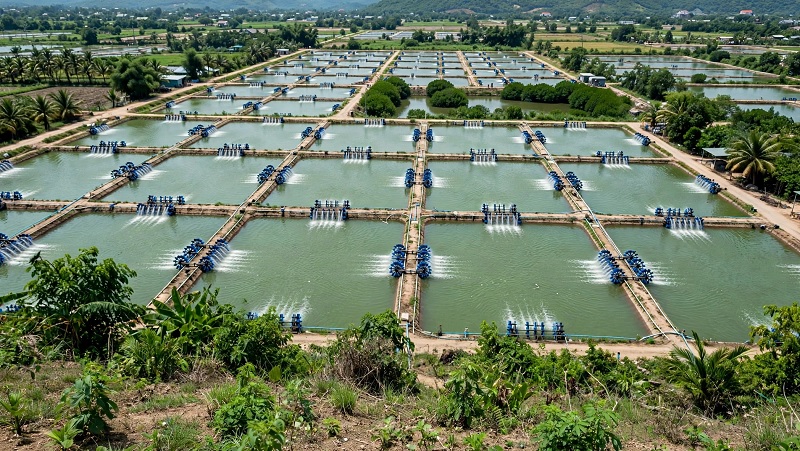
Shrimp farm ponds where water disinfection helps prevent white spot, EMS and Vibrio outbreaks
Understanding White Spot, EMS and Vibrio: Causes and Warning Signs
| Disease | Cause | Typical signs | How disinfection helps |
|---|---|---|---|
| White Spot Disease (WSSV) | White spot syndrome virus, carried by shrimp, crabs and other crustaceans | White spots on the carapace, red body, lethargy, rapid mortality that can approach 100% | Kills carriers and inactivates free virus in intake and pond water |
| EMS / AHPND | Specific strains of Vibrio parahaemolyticus carrying toxin genes | Pale, shrunken hepatopancreas, empty gut, mortality often within the first 30 to 35 days | Reduces Vibrio in water and on pond surfaces before stocking |
| Vibriosis | Opportunistic Vibrio species such as V. harveyi | Weak shrimp, luminous water at night, gut and shell lesions | Lowers bacterial load; works best with clean sludge-free soil |
Knowing the signs allows you to act early, but prevention is far cheaper than treatment. No chemical will bring back shrimp that already show clinical disease, which is why the preparation phase matters so much.
How Water Disinfection Prevents Shrimp Disease Outbreaks
Chlorine is one of the most widely used disinfectants in aquaculture because it acts quickly against a broad range of organisms. When calcium hypochlorite dissolves, it forms hypochlorous acid, a powerful oxidizer that damages bacterial cell walls, breaks down viral particles and kills many crustaceans and fish that can carry pathogens.
In disease prevention, chlorination does three jobs:
- Reduces pathogenic bacteria such as Vibrio in the water column.
- Inactivates free virus particles that may be present in intake water.
- Eliminates carriers such as wild crabs, copepods and small fish that bring pathogens into the pond.
For farms that want a dependable disinfectant, Vi Chlorine is a granular calcium hypochlorite with a minimum of 70% active chlorine, manufactured by Viet Tri Chemical JSC and exported through VIETCHEM. Its high and consistent chlorine content helps you calculate doses accurately and treat large water volumes with fewer bags than weaker products.
Water Disinfection Protocol for Shrimp Disease Prevention
Many successful farms use a reservoir or treatment pond system. Water is pumped through fine filters into a reservoir, disinfected, neutralized and settled, and only then transferred to the grow-out pond.
- Filter intake water. Use fine-mesh filter bags at every intake point to stop eggs, larvae and carriers.
- Check pH and turbidity. Chlorine is most effective at neutral to slightly alkaline pH. If the water is very turbid, let it settle first, because suspended organic matter consumes chlorine.
- Calculate the dose. Many farms use roughly 10 to 30 ppm of active chlorine, using the higher end for dirty or high-risk water.
- Dissolve and spread evenly. Pre-dissolve the granules in a bucket, apply across the surface, and run aerators to mix.
- Hold for 24 to 48 hours. Allow enough contact time for the disinfectant to work.
- Dechlorinate and test. Aerate, use sunlight and, if needed, sodium thiosulfate until a test kit reads zero chlorine.
- Transfer and condition the water. Move it to the grow-out pond, then fertilize and add beneficial bacteria.
Because the product contains 70% active chlorine, divide the required active chlorine by 0.70 to find the product amount:
| Target active chlorine | Product needed per 1,000 m³ (70% calcium hypochlorite) |
|---|---|
| 10 ppm | about 14.3 kg |
| 20 ppm | about 28.6 kg |
| 30 ppm | about 42.9 kg |
Worked example: A 5,000 m³ reservoir treated at 20 ppm needs about 5 × 28.6 = 143 kg of 70% calcium hypochlorite. That is just under six bags of Vi chlorine 25kg, a convenient size for farms without heavy handling equipment. Always run a jar test first and follow local regulations for chemical use.
Pond Bottom and Sludge: Where Water Disinfection Alone Is Not Enough
Many farmers are surprised that clean, disinfected water can still lead to an outbreak. The reason is often the pond bottom. Sludge holds organic matter, bacteria and in some cases viral particles, and chlorine is quickly used up when it meets thick organic waste.
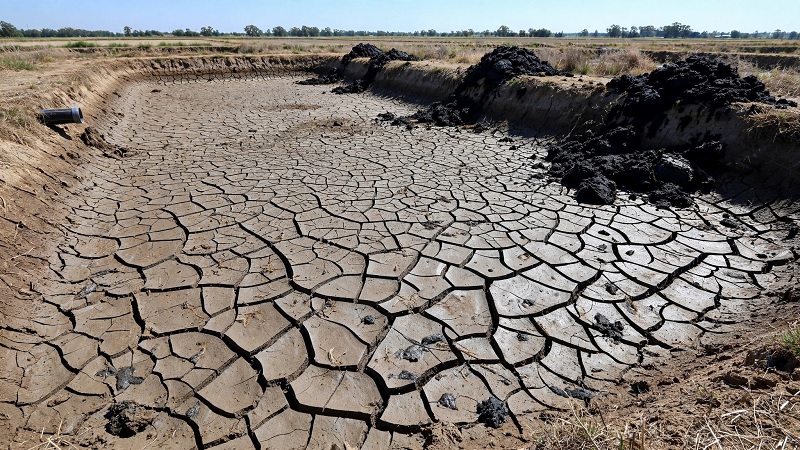
Dry cracked pond bottom after sludge removal as part of shrimp disease prevention
For this reason, a good disease prevention program includes:
- Draining and removing sludge from the center and feeding areas.
- Drying the soil until it cracks, usually two to four weeks.
- Tilling and liming according to soil pH.
- Refilling through filters and then disinfecting the water.
Some pathogens, including certain resistant spores, are not easily eliminated by water chlorination alone, so combining drying, liming and chlorine gives much better protection than any single measure.
Disinfecting Equipment, Nets and Footbaths to Stop Disease Spread
Pathogens move between ponds on boots, nets, buckets, sampling tools and even delivery vehicles. A single contaminated net can undo weeks of careful preparation. Place chlorine footbaths at pond entrances, soak nets and tools between ponds, and dedicate equipment to each pond whenever possible. Solutions for equipment are commonly in the range of 50 to 200 ppm depending on the item and contact time, but follow the protocol approved for your farm and always rinse chemically sensitive items.
Field experience helps here, since every region has different pressure from disease. To see how practical disinfection works in real shrimp ponds, read What Do Local Farmers Say About Vi-CHLORiNE.
Building a Complete Biosecurity Program Beyond Water Disinfection
Water disinfection is a powerful layer, but biosecurity works best when several layers overlap:
- Specific pathogen free (SPF) post-larvae tested by PCR before purchase.
- Crab fencing and bird nets around the pond perimeter.
- Probiotics and good management to keep Vibrio populations in check.
- Controlled feeding to avoid excess organic waste.
- Limited visitors and strict hygiene routines.
This integrated approach is increasingly adopted across the industry. A useful example appears in AQUADELTA - Dr.Tom Accompanies Vietshrimp: Vi-CHLORiNE Solution Enhancing Biosecurity in Aquaculture, which shows how disinfection and technical support work together to improve outcomes.
Monitoring Shrimp Health and Pond Water to Detect Outbreaks Early
Even the best preparation cannot guarantee zero risk, so daily monitoring is part of disease prevention. Look for changes in feeding behavior, shrimp swimming near the edges, pale or empty guts, and unusual mortality. Record dissolved oxygen, pH, temperature, salinity and alkalinity every day. Sudden changes often appear before disease signs.
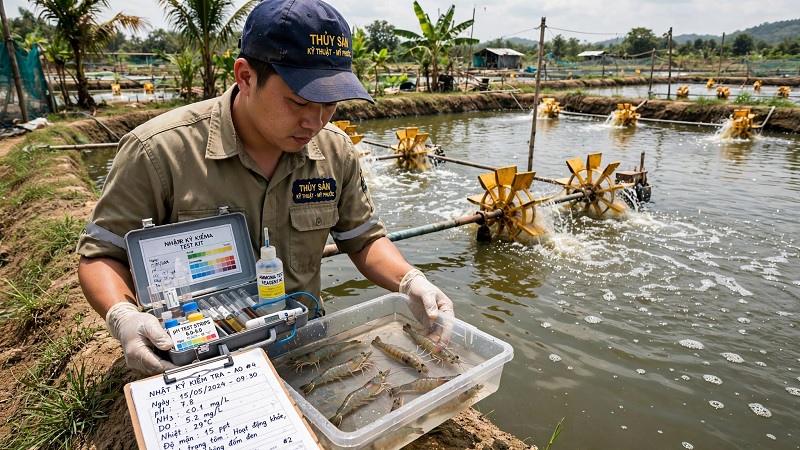
Farm technician checking shrimp health and water quality to detect disease early
If you suspect an outbreak, isolate the pond, stop water exchange, restrict access, and contact a shrimp health specialist for lab confirmation. Fast action protects your neighboring ponds.
Common Mistakes in Shrimp Disease Prevention and Water Disinfection
- Skipping drying and sludge removal. Chlorine cannot compensate for a dirty bottom.
- Guessing the chlorine dose. Too little leaves pathogens alive; too much wastes chemical and delays stocking.
- Treating turbid water. Settle or filter first to reduce chlorine demand.
- Stocking with residual chlorine. Always neutralize and test for zero chlorine, then run a bioassay.
- Neglecting the intake system. Contaminated water can bring carriers straight into a clean pond.
- Relying on chemicals only. Disinfection supports good management; it does not replace it.
Planning Your Chlorine Supply for Disease Prevention
Disease prevention depends on doing the right thing at the right time, so make sure the disinfectant is available before the pond preparation window begins. Estimate the total water volume of your reservoirs and ponds, decide on your target dose, and add a safety margin. For larger farms or farm groups, Vi chlorine 45kg packs reduce the number of bags to move and open, saving labor during busy preparation periods.
Conclusion: Water Disinfection Is the First Line of Defense Against Shrimp Disease
Preventing white spot, EMS and Vibrio outbreaks starts long before the first post-larvae are stocked. Dry the pond, remove sludge, filter and disinfect the water with the right chlorine dose, neutralize and test for zero chlorine, stock healthy post-larvae, and monitor every day. Each layer lowers the risk, and together they give your crop the best chance of reaching harvest.
Need Calcium Hypochlorite 70% for Shrimp Disease Prevention?
Get a quote, product specifications, and export support from our team. Available 24/7 on WhatsApp: (+84) 981 370 389 or email telesales@vi-chlorine.com.
Request a Quote NowFAQ: Shrimp Pond Preparation and Disease Prevention
1. How does shrimp pond preparation help prevent white spot, EMS and Vibrio?
Shrimp pond preparation removes sludge, dries the soil, filters water and disinfects it before stocking. These steps reduce pathogens and carriers in the pond, so shrimp start the crop in a cleaner environment with a lower risk of outbreaks.
2. How much chlorine should I use to disinfect water for disease prevention?
Many farms use roughly 10 to 30 ppm of active chlorine. With 70% calcium hypochlorite, that equals about 14 to 43 kg of product per 1,000 m³. Adjust the dose for turbidity and organic load, run a jar test, and follow local regulations.
3. Can chlorine kill white spot virus in pond water?
Chlorine can inactivate free virus particles in water and kill crustacean carriers when it is dosed correctly, but it cannot cure infected shrimp or remove virus from deep sludge. That is why drying the pond and filtering intake water are essential parts of shrimp pond preparation.
4. How long should a shrimp pond dry before stocking?
Most farms dry the pond bottom for about two to four weeks, until the soil cracks, depending on weather and soil type. Drying oxidizes organic matter and reduces many pathogens before the pond is refilled and disinfected.
5. What else should I include in shrimp pond preparation besides chlorine?
Include sludge removal, soil tilling and liming, crab and bird barriers, fine-mesh water filtration, residual chlorine testing, healthy PCR-tested post-larvae, probiotics, and daily monitoring. Chlorine works best as one layer of a complete biosecurity plan.