How Is Effluent Treated in Shrimp Farming? Complete Guide
- NEWS
- Q&A Chlorine
- 18/09/2026
Modern shrimp farming can generate wastewater containing uneaten feed, feces, suspended solids, plankton, dissolved nutrients, microorganisms, organic matter, and sometimes residues from pond-treatment chemicals. If this effluent is discharged without adequate treatment, it can increase nutrient loading, reduce dissolved oxygen in receiving waters, spread pathogens, and contribute to environmental problems around aquaculture zones.
For that reason, effluent treatment has become an important part of responsible shrimp farming. The most effective systems do not rely on one single treatment method. Instead, they use several stages that remove pollutants step by step.
In practice, a shrimp farm may use sedimentation ponds, settling basins, sludge traps, biofilters, aeration, biological ponds, constructed wetlands, disinfection, and water-reuse systems. The right combination depends on how intensive the farm is and the quality of the wastewater being produced.
How Is Effluent Treated in Shrimp Farming?
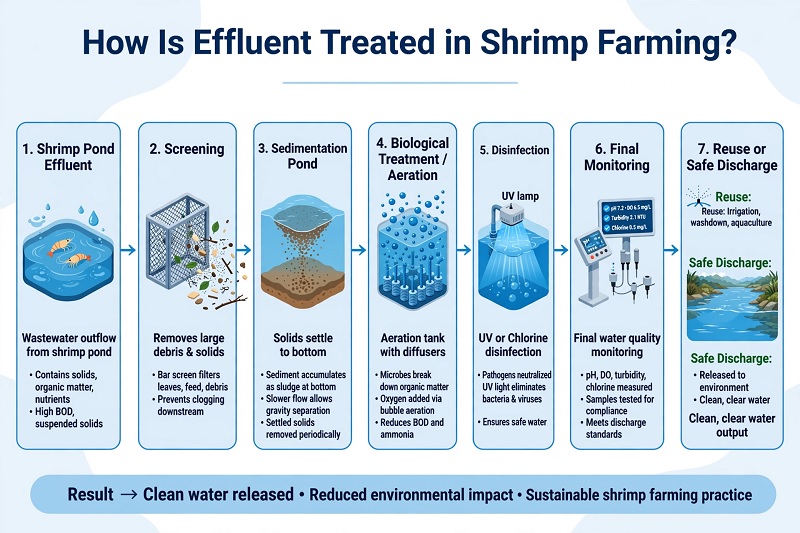
Shrimp-farm effluent is generally treated in several stages:
- Collection and screening to remove large debris and coarse solids;
- Sedimentation to settle suspended particles and sludge;
- Biological treatment to reduce biodegradable organic matter and nitrogen compounds;
- Aeration to improve dissolved oxygen and support beneficial microorganisms;
- Nutrient control to reduce ammonia, nitrite, nitrate, and phosphorus;
- Disinfection where needed to control pathogens;
- Final monitoring before water is discharged or reused.
This multi-stage approach is generally more effective than attempting to treat the entire pollution load with a single chemical or process.
For farms evaluating chlorine-based disinfection as part of a broader water-treatment program, additional product information is available from vi chlorine.
Why Effluent Treatment Is Important in Shrimp Farming
Shrimp farming is highly dependent on water quality. The same is true for the surrounding aquatic environment.
Effluent from intensive or semi-intensive shrimp ponds may contain elevated concentrations of:
- Total suspended solids;
- Uneaten feed;
- Shrimp feces;
- Organic sludge;
- Ammonia;
- Nitrite and nitrate;
- Phosphate;
- Phytoplankton and algae;
- Bacteria and other microorganisms;
- Salts and dissolved minerals.
When these materials are released into canals, rivers, estuaries, or coastal waters without adequate treatment, they can contribute to eutrophication, oxygen depletion, sediment accumulation, and disease transmission.
Good effluent treatment therefore serves several purposes at the same time: environmental protection, disease prevention, regulatory compliance, reduced water consumption, and improved farm sustainability.
What Is in Shrimp Farm Effluent?
Shrimp pond wastewater is not simply “dirty water.” It contains a complex mixture of physical, chemical, and biological contaminants.
Suspended solids
Suspended solids include feed particles, feces, clay, detritus, dead algae, biofloc particles, and sediment disturbed from pond bottoms.
These solids can increase turbidity and contribute to organic loading in receiving waters.
Organic matter
Organic matter comes mainly from feed waste, shrimp feces, dead plankton, and other biological residues. As microorganisms decompose this material, they consume oxygen.
Nitrogen compounds
Protein-rich shrimp feed is a major source of nitrogen. Some nitrogen becomes shrimp biomass, but a significant portion can end up in the water as ammonia, nitrite, nitrate, and organic nitrogen.
Phosphorus
Phosphorus from feed can accumulate in pond sediment or remain suspended in the water. Excess phosphorus can stimulate algal growth when discharged into natural waters.
Pathogens
Effluent can carry bacteria, viruses, parasites, or other microorganisms. In densely concentrated aquaculture areas, untreated discharge can potentially transport pathogens between farms.
Step 1: Screening Shrimp Farm Effluent
The first treatment step is often physical screening.
Screening removes larger materials before wastewater enters settling ponds or treatment basins. Screens may capture:
- large feed particles;
- plant material;
- shell fragments;
- large organic debris;
- floating waste.
Removing coarse solids early helps prevent downstream equipment from clogging and reduces the load on later treatment stages.
Simple farms may use mesh screens at drainage outlets, while larger operations can use more structured filtration or solids-capture systems.
Step 2: Sedimentation in Shrimp Farm Effluent Treatment
Sedimentation is one of the most important and cost-effective treatment methods in shrimp farming.
Effluent is transferred to a settling pond or sedimentation basin, where water velocity is reduced. Heavier suspended particles gradually sink to the bottom.
The settled material forms sludge that can later be removed and managed separately.
Effective sedimentation can significantly reduce:
- Total suspended solids;
- Particulate organic matter;
- Feed residues;
- Fecal material;
- Some phosphorus associated with particles.
The performance of a sedimentation pond depends on hydraulic retention time, pond depth, flow pattern, particle size, and how frequently accumulated sludge is removed.
Where treatment volumes are large, facilities may assess practical product formats such as vi chlorine 45kg for later disinfection stages, depending on treatment design and product specifications.
Step 3: Biological Treatment of Shrimp Farm Effluent
After major solids are removed, dissolved organic matter and nitrogen compounds may still remain in the water.
Biological treatment uses microorganisms to convert or remove these pollutants.
Beneficial bacteria can help degrade organic matter and participate in nitrogen transformations such as nitrification and denitrification.
Nitrification
Nitrifying microorganisms convert ammonia first to nitrite and then to nitrate under aerobic conditions.
Denitrification
Under suitable low-oxygen conditions, denitrifying bacteria can convert nitrate into nitrogen gas, which leaves the water naturally.
This combination can substantially reduce nitrogen loading when systems are properly designed and maintained.
Step 4: Aeration in Shrimp Farming Effluent Treatment
Aeration is commonly used to improve dissolved oxygen and accelerate biological treatment.
Wastewater with high organic matter can consume large amounts of oxygen during microbial decomposition. If dissolved oxygen falls too low, anaerobic conditions can develop, leading to odors, hydrogen sulfide formation, and unstable treatment performance.
Aeration can:
- increase dissolved oxygen;
- support aerobic bacteria;
- improve organic-matter breakdown;
- reduce anaerobic odor formation;
- support nitrification;
- help stabilize treatment ponds.
Paddlewheel aerators, diffused-air systems, blowers, and other mechanical aeration devices may be used depending on farm design.
Step 5: Nutrient Removal from Shrimp Farm Effluent
Nitrogen and phosphorus are among the most important nutrients to control in aquaculture wastewater.
If discharged in excessive quantities, these nutrients can stimulate algal blooms in surrounding waterways.
Nutrient removal methods may include:
- biological nitrification and denitrification;
- algae-based treatment ponds;
- constructed wetlands;
- aquatic plants;
- biofilters;
- microbial treatment systems;
- water reuse.
Some farms also use integrated systems in which algae, plants, shellfish, or other organisms recover nutrients from wastewater.
This approach can reduce pollution while turning some waste nutrients into useful biomass.
Step 6: Disinfection of Effluent in Shrimp Farming
Disinfection may be applied when there is a significant risk of pathogens being released into the environment or transferred between production systems.
Possible disinfection methods include chlorine-based treatment, ozone, ultraviolet systems, or other approved technologies.
Chlorine-based products can be effective because they oxidize and inactivate many microorganisms. However, treatment must be carefully controlled.
Disinfection should not be confused with complete wastewater treatment. Chlorine does not remove all suspended solids, nitrogen, phosphorus, or organic loading. Those pollutants should normally be reduced before the final disinfection stage.
This is why the preferred sequence is generally:
Solids Removal → Biological Treatment → Clarification → Disinfection → Monitoring
Using chlorine only after much of the organic load has been removed can also reduce unnecessary chlorine demand.
How Chlorine Is Used in Shrimp Farm Effluent Treatment
Chlorine may be used as one part of a multi-stage effluent-treatment system, particularly when microbial control is required before discharge or reuse.
Its effectiveness depends on several factors:
- pH;
- temperature;
- organic matter;
- ammonia;
- turbidity;
- chlorine dose;
- contact time;
- target microorganisms.
Water containing high levels of organic matter or ammonia can exert a strong chlorine demand. For this reason, it is generally more efficient to remove solids and organic pollutants before chlorination.
Farmers should also ensure that any residual chlorine is appropriately managed before treated effluent is released into sensitive environments or reused in culture systems.
Step 7: Constructed Wetlands for Shrimp Effluent Treatment
Constructed wetlands are increasingly used as a low-energy treatment option for aquaculture wastewater.
These systems use plants, microorganisms, sediment, and natural biological processes to remove pollutants.
Wetlands can help reduce:
- suspended solids;
- organic matter;
- nitrogen;
- phosphorus;
- some microbial contaminants.
They can also provide an additional polishing step after sedimentation and biological treatment.
The effectiveness of a constructed wetland depends on plant species, hydraulic loading, retention time, salinity, climate, and maintenance.
Step 8: Final Monitoring Before Effluent Discharge
Water should be tested before discharge or reuse.
Important parameters may include:
- pH;
- dissolved oxygen;
- temperature;
- salinity;
- total suspended solids;
- BOD;
- COD;
- ammonia;
- nitrite;
- nitrate;
- phosphate;
- microbial indicators;
- residual chlorine where chlorine has been used.
Monitoring allows the farm to confirm that the treatment system is operating effectively and that the water meets the applicable discharge or reuse criteria.
Field experience with water-quality management can also be explored through What Do Local Farmers Say About Vi-CHLORiNE.
Shrimp Farm Effluent Treatment Methods Compared
| Treatment Method | Main Purpose | Typical Pollutants Removed |
|---|---|---|
| Screening | Coarse solids removal | Large debris, feed particles |
| Sedimentation | Settling of suspended solids | TSS, organic sludge |
| Biological treatment | Organic and nitrogen removal | BOD, ammonia, nitrogen |
| Aeration | Increase oxygen | Supports organic degradation |
| Wetlands | Natural polishing | Nutrients, solids, organics |
| Disinfection | Pathogen reduction | Bacteria and other microorganisms |
| Water reuse | Reduce discharge | Reduces overall pollutant release |
How Recirculation Reduces Effluent in Shrimp Farming
One of the most effective ways to reduce effluent pollution is to reduce the amount of wastewater that needs to be discharged.
Recirculating aquaculture systems and water-reuse strategies can substantially lower water exchange.
Treated water may be returned to reservoirs or production systems after appropriate filtration, biological treatment, disinfection, and quality control.
Benefits can include:
- lower water consumption;
- reduced discharge volume;
- lower pathogen introduction risk;
- improved biosecurity;
- better control over water quality.
However, recirculation requires careful monitoring because pollutants can accumulate if treatment capacity is inadequate.
How Biofloc Technology Affects Shrimp Farm Effluent
Biofloc technology can reduce water exchange by converting dissolved nutrients into microbial biomass.
By managing the carbon-to-nitrogen balance, beneficial microbial communities can assimilate nitrogen compounds and form bioflocs that may also serve as a supplemental food source for shrimp.
Reduced water exchange can result in lower effluent volumes.
However, biofloc systems still require solids management because suspended biomass and sludge can accumulate over time.
Proper settling, sludge removal, and water-quality monitoring therefore remain important.
Sludge Management in Shrimp Farming Effluent Treatment
Effluent treatment transfers many pollutants from the water into sludge. That sludge then needs to be managed responsibly.
Shrimp-farm sludge may contain:
- organic matter;
- feed residues;
- feces;
- microbial biomass;
- nutrients;
- mineral sediment.
If sludge is simply dumped beside ponds where runoff can return it to canals, part of the pollution problem is merely relocated rather than solved.
Depending on local conditions and regulations, sludge may be dewatered, dried, stabilized, composted, or managed through other suitable methods.
Environmental Benefits of Treating Shrimp Farm Effluent
Proper effluent treatment provides direct benefits to both farms and surrounding ecosystems.
These can include:
- lower organic pollution;
- reduced nutrient discharge;
- less sediment accumulation;
- lower risk of pathogen spread;
- better coastal water quality;
- reduced conflict between aquaculture and neighboring water users;
- better long-term sustainability of farming areas.
Effluent management is becoming increasingly important as shrimp production expands and farms operate at higher densities.
Broader industry developments and growth opportunities are discussed in Global Shrimp Market Outlook 2025: A Golden Opportunity for Asia.
Best Practices for Shrimp Farming Effluent Treatment
Effective effluent management begins before water reaches the treatment pond.
Farmers can reduce wastewater pollution by improving farm management.
- Optimize feeding. Excess feed increases organic matter, ammonia, and sludge.
- Monitor feed conversion ratio. Poor feed efficiency often translates into greater waste generation.
- Remove sludge regularly. Prevent excessive accumulation on pond bottoms.
- Separate treatment water from production ponds. Dedicated settling and treatment ponds improve process control.
- Maintain adequate aeration. Avoid anaerobic conditions.
- Monitor ammonia and nitrite. High concentrations indicate insufficient biological treatment.
- Use disinfection only where needed. Chemical treatment should have a defined objective.
- Test water before discharge. Do not rely only on visual appearance.
- Reuse water where practical. Reduce both water consumption and environmental discharge.
How Effluent Treatment Supports Shrimp Farm Biosecurity
Effluent management is not only an environmental issue; it is also a biosecurity issue.
Untreated discharge can potentially transport pathogens from one pond or farm to another, especially in farming areas where multiple facilities share the same canals or water sources.
Separating drainage systems, treating effluent, managing sludge, and controlling microbial loads can help reduce this risk.
A well-designed farm therefore treats both incoming water and outgoing water as part of the same biosecurity strategy.
Can Chlorine Be Used in Shrimp Farm Effluent Before Discharge?
Chlorine-based disinfection can be used in suitable treatment systems where microbial reduction is required. However, it should generally be applied after solids and organic loads have already been reduced.
High suspended solids and organic matter can shield microorganisms and consume chlorine, making disinfection less efficient.
Therefore, a more effective sequence is often:
Sedimentation → Biological Treatment → Clarification → Chlorine Disinfection → Residual Monitoring
Where a smaller product format is more practical, Vi chlorine 25kg may be considered according to treatment volume, storage needs, and the product’s technical specifications.
How to Improve Shrimp Farm Effluent Treatment Efficiency
Farmers can improve performance by combining operational control with treatment infrastructure.
Useful measures include:
- reducing overfeeding;
- using settling ponds with sufficient retention time;
- removing sludge frequently;
- maintaining stable aeration;
- monitoring nitrogen compounds;
- optimizing microbial treatment;
- preventing short-circuit flow in treatment ponds;
- testing discharge water regularly;
- adjusting treatment based on real data.
The most effective treatment system is one that is designed around the actual waste load of the farm rather than copied directly from another operation.
Vi-CHLORiNE for Shrimp Farm Effluent and Water Treatment
Vi-CHLORiNE provides chlorine-based products for water treatment, sanitation, microbial control, and aquaculture biosecurity applications according to product specifications and recommended procedures.
In shrimp farming, chlorine-based treatment may be considered for applications such as incoming-water preparation, pond sanitation, equipment disinfection, reservoir treatment, and selected effluent-disinfection stages.
For effluent treatment, chlorine should be integrated into a broader process that first reduces suspended solids, sludge, organic matter, and nutrient loads. This makes disinfection more efficient and avoids using chlorine as a substitute for proper wastewater treatment.
Operators should consider treatment volume, water quality, chlorine demand, target microorganisms, contact time, residual chlorine, storage conditions, and applicable environmental requirements before establishing a dosing program.
Additional examples of Vi-CHLORiNE in aquaculture biosecurity are discussed in AQUADELTA - Dr.Tom Accompanies Vietshrimp 2025: Vi-CHLORiNE Solution Enhancing Biosecurity in Aquaculture.
Vi-CHLORiNE offers practical chlorine product formats for pond preparation, sanitation, water treatment, microbial control, and selected aquaculture effluent-disinfection applications.
Contact the Vi-CHLORiNE team for product specifications, packaging information, storage recommendations, and technical guidance based on your aquaculture water-treatment requirements.
FAQ: How Is Effluent Treated in Shrimp Farming?
1. How is effluent treated in shrimp farming?
Shrimp-farm effluent is typically treated through screening, sedimentation, biological treatment, aeration, nutrient removal, clarification, disinfection, and final water-quality monitoring. The treatment system depends on farm size, stocking density, waste load, discharge requirements, and whether the water will be discharged or reused.
2. What are the main pollutants in shrimp farm effluent?
Main pollutants include suspended solids, feed residues, shrimp feces, organic matter, ammonia, nitrite, nitrate, phosphorus, plankton, sludge, and microorganisms. The relative concentration of each pollutant depends on stocking density, feed management, water exchange, and farm design.
3. Can chlorine be used to treat shrimp farm effluent?
Yes. Chlorine-based products can be used for microbial control and disinfection in appropriately designed effluent-treatment systems. However, solids and organic matter should normally be reduced first because they can consume chlorine and reduce disinfection efficiency.
4. Can treated shrimp farm effluent be reused?
Yes. Treated water can potentially be reused when it has undergone suitable solids removal, biological treatment, disinfection, and water-quality verification. Reuse can reduce freshwater demand and lower the amount of wastewater discharged to the environment.
5. What should be tested before shrimp farm effluent is discharged?
Important parameters may include pH, dissolved oxygen, total suspended solids, COD, BOD, ammonia, nitrite, nitrate, phosphate, salinity, microbial indicators, and residual chlorine when chlorine-based disinfection has been used. The exact requirements depend on local regulations and the receiving environment.
Conclusion: How Shrimp Farming Effluent Should Be Treated
So, how is effluent treated in shrimp farming? The most effective approach is a multi-stage treatment system that removes pollutants in sequence rather than relying on one single process.
Screening and sedimentation remove coarse and suspended solids. Biological treatment and aeration help reduce organic matter and nitrogen compounds. Wetlands, biofilters, or other polishing systems can further remove nutrients, while disinfection may be used to control microbial risks before discharge or reuse.
Chlorine can play a valuable role in the final microbial-control stage, but it should not replace physical solids removal, nutrient management, biological treatment, or sludge control.
For modern shrimp farms, effective effluent treatment supports not only environmental compliance but also better biosecurity, more efficient water use, reduced disease risk, and more sustainable long-term production.