
Chlorine Tablets for Well Water: Ultimate Guide to Purifying & Shocking
- Q&A Chlorine
- 26/08/2026
Yes, chlorine tablets for well water are highly effective for disinfecting and purifying private groundwater systems. By utilizing concentrated calcium hypochlorite, these tablets release active free chlorine that neutralizes harmful pathogens, including E. coli, coliform bacteria, and viruses. Furthermore, they oxidize heavy metals like iron and manganese, eliminating foul odors caused by sulfur bacteria. For optimal clarity and absolute biosecurity, utilizing premium-grade solutions like vi chlorine ensures a safe, crystal-clear water supply for both residential households and large-scale agricultural operations.
Access to clean, safe drinking water is a fundamental human right. While municipal water supplies are heavily regulated and continuously treated at centralized plants, millions of homeowners, farmers, and rural businesses rely on private wells for their daily water needs. Unlike city water, private well water is not automatically treated or monitored by government agencies. It is the sole responsibility of the well owner to ensure that the water drawn from the ground is free from harmful microorganisms, toxic heavy metals, and unpleasant odors. This is where the science of localized water treatment becomes essential, and one of the most reliable methods available today is the use of high-quality chlorination.
Groundwater may appear pristine as it flows from the aquifer, but it is frequently susceptible to invisible contamination. Surface runoff from heavy rains can introduce agricultural pesticides, animal waste, and dangerous bacteria like E. coli into the well shaft. Additionally, deep aquifers often contain elevated levels of dissolved iron, manganese, and hydrogen sulfide gas, which give the water a metallic taste, stain plumbing fixtures, and produce a notorious "rotten egg" smell. To combat this complex array of biological and chemical challenges, water treatment professionals and well owners turn to robust oxidation solutions.
Understanding Chlorine Tablets for Well Water: Why Treat Your Private Well?
The primary reason for using chlorine tablets for well water is broad-spectrum disinfection. A private well is a living ecosystem, and without proper management, it can become a breeding ground for dangerous pathogens. Coliform bacteria, which naturally occur in the digestive tracts of warm-blooded animals and in soil, are the standard indicator of water quality. If a well tests positive for coliform, it strongly suggests that the well is compromised and that more dangerous, disease-causing organisms may be present.
Beyond biological threats, chemical and aesthetic issues plague many rural wells. Iron bacteria and sulfur bacteria do not typically cause human disease, but they wreak havoc on plumbing systems. Iron bacteria form thick, rust-colored slimes that clog well screens, pipes, and water filters, significantly reducing water pressure and damaging expensive pumping equipment. Sulfur bacteria produce hydrogen sulfide gas, making the water nearly undrinkable due to its noxious odor. The introduction of chlorine tablets for well water immediately disrupts these bacterial colonies. As a powerful oxidizing agent, chlorine not only kills the bacteria but also chemically alters dissolved iron and manganese, turning them into solid particles that can be easily filtered out of the water column.
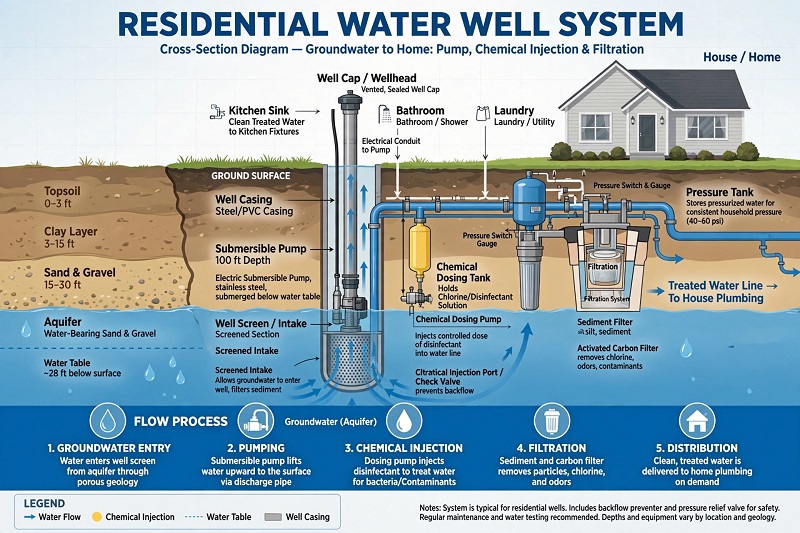
A cross-section diagram of a residential water well system, illustrating how groundwater is pumped to the surface and passes through a chemical injection and filtration system
How Chlorine Tablets for Well Water Work to Purify and Clarify
To fully appreciate the efficacy of chlorine tablets for well water, it is important to understand the underlying chemistry. Most high-grade chlorine tablets and granules designed for well sanitation are composed of Calcium Hypochlorite (Ca(ClO)2). When calcium hypochlorite is introduced into the water, it dissolves and undergoes a hydrolysis reaction, producing hypochlorous acid (HOCl) and hypochlorite ions (OCl-). Together, these two compounds form what is known as "free available chlorine."
Hypochlorous acid is the true hero of water disinfection. Because it carries a neutral electrical charge, it can easily penetrate the negatively charged cell walls of bacteria, viruses, and cysts. Once inside the microorganism, hypochlorous acid aggressively attacks vital cellular enzymes, denatures proteins, and destroys the pathogen's DNA, rendering it harmless in a matter of seconds to minutes, depending on the concentration and contact time.
In addition to its biocidal properties, the oxidative power of calcium hypochlorite is unmatched for water clarification. When dosed correctly, the chlorine reacts with organic tannins, neutralizing the yellowish or brownish tints they impart to the water. It also oxidizes inorganic minerals. For example, invisible dissolved ferrous iron is oxidized into ferric iron, a solid precipitate that turns the water temporarily cloudy or rusty before it is captured by a mechanical sediment filter, leaving the final product crystal clear.
Introducing Vi-chlorine: The Ultimate Solution for Water Clarification
When it comes to treating well water, not all chlorine products are created equal. Using standard household bleach (sodium hypochlorite) is a common but flawed DIY approach. Liquid bleach degrades rapidly in storage, contains unwanted stabilizing additives, and often lacks the concentrated strength required for a thorough well shock. For absolute reliability, stability, and professional-grade oxidation, specialized solid calcium hypochlorite products are the industry gold standard.
This is where our flagship product line excels. Vi-chlorine is engineered to deliver a potent, consistent, and highly soluble dose of active chlorine, ensuring maximum biosecurity and rapid water clarification. Unlike inferior products that leave heavy, insoluble calcium scale at the bottom of mixing tanks, our formulation dissolves cleanly, maximizing the amount of hypochlorous acid generated in the water column.
For residential well owners, rural estates, and medium-scale commercial water storage facilities, managing chemical logistics requires a balance of potency and ease of handling. The Vi chlorine 25kg packaging format provides the perfect solution. It offers a substantial supply of high-purity calcium hypochlorite that is easy to store, handle, and dose for routine maintenance or emergency shock chlorination protocols, ensuring that your family or business always has access to safe, clear water.
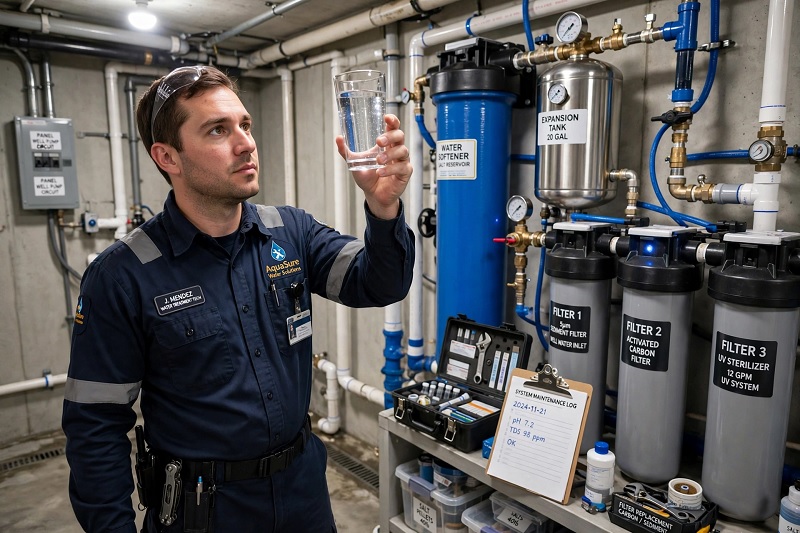
A professional water treatment technician inspecting a clear glass of freshly purified well water alongside a residential filtration setup.
Scaling Up: Industrial and Agricultural Well Water Biosecurity
While residential well treatment is vital for human health, the massive scale of industrial and agricultural water usage demands an even more rigorous approach to chlorination. In modern agriculture, particularly in intensive livestock and aquaculture farming, groundwater is extracted in massive volumes. If this source water is contaminated with pathogens, it can decimate an entire crop or livestock population in a matter of days.
In the commercial aquaculture sector, shrimp farming represents one of the most lucrative yet biosecurity-sensitive industries in the world. Shrimp are highly vulnerable to aggressive bacterial strains like Vibrio parahaemolyticus, which causes Early Mortality Syndrome (EMS). Farmers cannot simply pump raw well water or surface water directly into their grow-out ponds; the water must be rigorously sterilized first. Heavy doses of chlorine are used to "shock" the water in settling ponds, eradicating all biological threats before the water is deemed safe for shrimp post-larvae.
As the industry expands to meet soaring global demand, strict adherence to water quality protocols is the key differentiator for profitable harvests. Detailed market analyses, such as the Global Shrimp Market Outlook 2025: A Golden Opportunity for Asia, emphasize that advanced water treatment and biosecurity measures are driving the success of top-tier exporters in the region.
To support these massive agricultural operations, bulk chemical supply is critical. Large-scale farms and industrial processing plants rely on the heavy-duty vi chlorine 45kg drum. This industrial packaging ensures that operators have an uninterrupted, cost-effective supply of high-concentration sanitizer ready for massive pond preparation, continuous dosing systems, and emergency biosecurity interventions.
The commitment to excellence in agricultural water treatment is further highlighted at major industry events. Breakthroughs in biosecurity protocols were recently showcased at prominent forums, as detailed in the comprehensive report: AQUADELTA - Dr.Tom Accompanies Vietshrimp 2025: Vi-CHLORiNE Solution Enhancing Biosecurity in Aquaculture. These events underscore the critical role that premium calcium hypochlorite plays in safeguarding multibillion-dollar industries from microscopic threats.
Theoretical science and industry reports are important, but real-world results are what truly matter to producers on the ground. The practical benefits of maintaining pristine water quality through superior chlorination are echoed by the very people whose livelihoods depend on it. Discover the firsthand accounts and operational transformations in the article What Do Local Farmers Say About Vi-CHLORiNE, where regional farmers share their success stories of improved survival rates, better water clarity, and increased profitability.
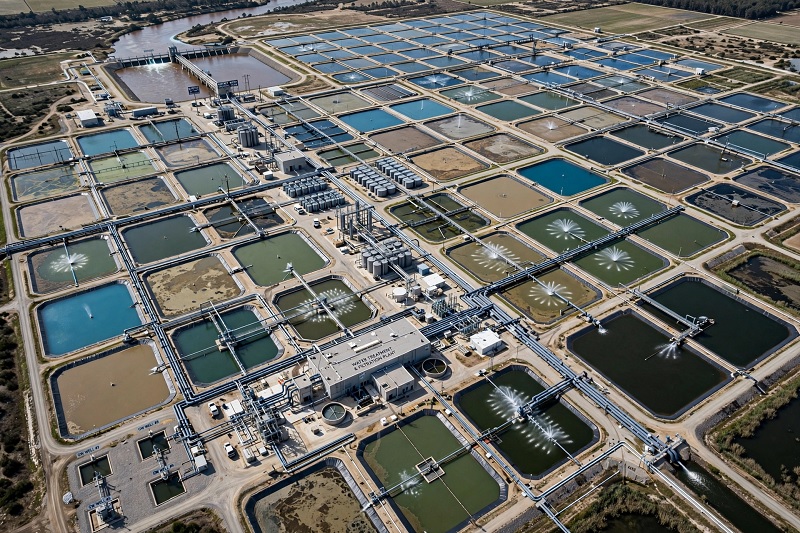
A sprawling commercial aquaculture facility with large water treatment ponds, highlighting the industrial scale of groundwater and surface water management.
Step-by-Step Guide: How to Use Chlorine Tablets for Well Water Treatment
Using chlorine tablets for well water requires precision and adherence to safety protocols. There are generally two methods of well chlorination: Continuous Chlorination and Shock Chlorination.
1. Continuous Chlorination (Inline Dosing):
This method is used when a well has a persistent contamination issue, such as chronic coliform presence or exceptionally high iron and sulfur levels. It involves installing a specialized chemical feeder or dosing pump directly into the water line between the well pump and the pressure tank. Solid tablets are placed in an erosion feeder, and as water flows past them, a precise amount of chlorine is dissolved into the system. The water then enters a retention tank, giving the chlorine adequate "contact time" (usually 20 to 30 minutes) to kill bacteria and oxidize metals before passing through a carbon filter to remove the residual chlorine taste and oxidized particles.
2. Shock Chlorination (Emergency/Maintenance Treatment):
Shock chlorination is a periodic maintenance procedure used to disinfect the entire well casing, pump, and household plumbing system in one massive dose. This is highly recommended after a new well is drilled, a pump is replaced, after flooding, or if a routine water test comes back positive for bacteria.
The Shocking Process:
- Preparation: Calculate the volume of water in your well casing. Dissolve the required amount of high-purity granular chlorine or crushed tablets in a 5-gallon bucket of clean water outside the well. Never drop solid tablets directly down the well casing, as they can sink to the bottom, fail to mix properly, and cause localized corrosion to the well pump.
- Injection: Pour the concentrated chlorine solution directly down the well casing.
- Circulation: Connect a garden hose to an outdoor spigot and run the water back down into the well casing. This recirculates the chlorinated water, washing the interior walls of the casing and ensuring the chemical is thoroughly mixed throughout the water column. Continue until you smell a strong chlorine odor coming from the hose.
- Plumbing Distribution: Go inside the house and turn on every cold and hot water faucet, flush every toilet, and run appliances until the smell of chlorine is present at every fixture. Turn off all taps.
- Rest Period: Allow the highly chlorinated water to sit in the well and plumbing system undisturbed for 12 to 24 hours. Do not use the water during this time.
- Flushing: After the resting period, connect a hose to an outside spigot and run the water into a safe drainage area (away from septic systems and sensitive landscaping) until the chlorine smell is completely gone.
Common Mistakes When Using Chlorine Tablets for Well Water Systems
While chlorination is highly effective, operators and homeowners frequently make critical errors that compromise the process:
Dropping Tablets Directly into the Well: As mentioned, solid tablets sink to the bottom of the well. They dissolve slowly, creating a highly concentrated, corrosive zone around the expensive submersible pump, while failing to disinfect the upper water column. Always dissolve the chemical in a bucket of water first before pouring it into the well.
Ignoring pH Levels: The disinfecting power of chlorine is heavily dependent on the pH of the water. Hypochlorous acid is most effective in water with a pH between 6.5 and 7.5. If your well water is highly alkaline (pH above 8.0), the chlorine converts into hypochlorite ions, which are significantly weaker disinfectants, meaning you will need much more chemical and longer contact times to achieve a safe bacterial kill rate.
Failing to Bypass Water Softeners: During a shock chlorination procedure, you must bypass water softeners, reverse osmosis membranes, and UV filters. Extremely high doses of chlorine will permanently damage the delicate resin beads in a softener and destroy RO membranes.
Frequently Asked Questions (FAQ) About Chlorine Tablets for Well Water
Q1: Are chlorine tablets for well water safe for human consumption?
A: Yes, when used correctly through an inline dosing system that maintains a safe residual (0.2 - 0.5 ppm), or when a well is properly flushed after a shock treatment, the water is completely safe to drink and meets standard health guidelines.
Q2: Can I use standard swimming pool chlorine tablets in my drinking water well?
A: Absolutely not. Many pool tablets (like Trichlor or Dichlor) contain cyanuric acid as a UV stabilizer. Cyanuric acid is not approved for drinking water systems and can cause adverse health effects. Always use NSF-certified Calcium Hypochlorite intended for potable water.
Q3: How often should I shock my private well?
A: It is generally recommended to test your well water annually. You should only shock the well if the test returns positive for coliform bacteria, if you notice a sudden change in taste/odor, after heavy flooding, or following any maintenance work on the pump or casing.
Q4: Will chlorine tablets for well water remove hard water scale?
A: No. Chlorine is an oxidizer and disinfectant, not a water softener. It will oxidize iron and sulfur, but it will not remove calcium and magnesium (the minerals that cause water hardness). You still need a water softener for hard water issues.
Q5: Why is my water cloudy or rusty immediately after chlorinating my well?
A: This is a sign that the chlorine is working! The chemical is oxidizing dissolved, invisible iron and manganese into solid rust particles. Once you flush the system thoroughly or pass the water through a mechanical sediment filter, the water will run crystal clear.
Protect Your Well Water and Ensure Total Biosecurity
Don't leave the safety of your water supply to chance. Upgrade to professional-grade calcium hypochlorite for unparalleled water clarification and disinfection. Contact our experts today to find the perfect chemical solution for your residential or agricultural needs!
Contact Vi-Chlorine Experts Now