
Best Pool Shock for Salt Water Pools (2026 Guide & Review)
- Q&A Chlorine
- 26/08/2026
The best pool shock for salt water pools is un-stabilized Calcium Hypochlorite (Cal-Hypo) with a high active chlorine concentration (typically 65% to 70%). Unlike Dichlor or Trichlor shocks, Cal-Hypo does not contain cyanuric acid (CYA), preventing over-stabilization and chlorine lock in salt systems. It dissolves rapidly to break down chloramines, eradicate algae, and restore water clarity without interfering with the salt chlorine generator cell. For the ultimate water clarification and biosecurity, high-purity solutions like vi chlorine are highly recommended by aquatic professionals to maintain a safe, crystal-clear swimming environment.
Owning a salt water pool is often praised as the pinnacle of backyard luxury. The water feels softer on the skin, it is gentler on the eyes, and you are free from the daily chore of manually adding liquid chlorine or dropping tablets into a floating dispenser. Instead, a salt chlorine generator (SCG) operates continuously, utilizing an electrolytic cell to convert dissolved pool salt into pure, active free chlorine. It is an elegant, highly efficient system. However, a widespread and dangerous myth persists among many salt pool owners: the belief that a salt water pool never needs to be shocked.
The reality is quite the opposite. While your salt cell is excellent at providing a steady, low-level baseline of daily chlorine to keep the water sanitized under normal conditions, it is not designed to handle sudden, massive influxes of contaminants. When your pool faces extreme heat, heavy bather loads from a weekend pool party, torrential rainstorms, or a sudden algae bloom, the salt cell simply cannot produce chlorine fast enough to keep up with the exponential growth of bacteria and the accumulation of organic waste. This is when supplemental oxidation is required, making the search for the best pool shock for salt water pools an essential part of your maintenance routine.
In this comprehensive, deep-dive guide, we will explore the intricate chemistry of salt water systems, explain exactly why and when you need to shock, break down the different types of shock treatments available on the market, and reveal why high-purity Calcium Hypochlorite stands uncontested as the superior choice. We will also bridge the gap between backyard pool maintenance and large-scale agricultural biosecurity to show how professional-grade chemicals ensure absolute water clarity.
Understanding the Need: Why Seek the Best Pool Shock for Salt Water Pools?
To fully grasp why you need the best pool shock for salt water pools, you must first understand what happens to chlorine after it attacks a contaminant. When the free chlorine generated by your salt cell encounters organic matter—such as sweat, sunscreen, urine, leaves, or insects—it chemically binds to these impurities to neutralize them. In doing so, the free chlorine is converted into combined chlorine, commonly referred to as chloramines.
Chloramines are the true villains of pool water chemistry. They are responsible for that overpowering, harsh "chemical" smell often associated with poorly maintained public pools. More importantly, chloramines are highly ineffective sanitizers and cause severe skin and eye irritation. Once combined chlorine levels reach 0.5 parts per million (ppm) or higher, your pool is essentially operating with a compromised immune system. The only way to destroy these chloramines and restore a healthy balance of free chlorine is through a process called "breakpoint chlorination."
Breakpoint chlorination requires hitting the pool water with a massive, sudden dose of active chlorine—typically 10 times the amount of combined chlorine present. Your salt chlorine generator, even if turned up to its "Boost" or "Super Chlorinate" setting, produces chlorine too slowly to reach this crucial breakpoint threshold effectively. Attempting to shock the pool using only the salt cell puts immense strain on the electrolytic plates, significantly shortening the lifespan of this expensive piece of equipment. Therefore, manually adding a powerful, concentrated external shock is the safest and most effective strategy for both your water quality and your hardware.
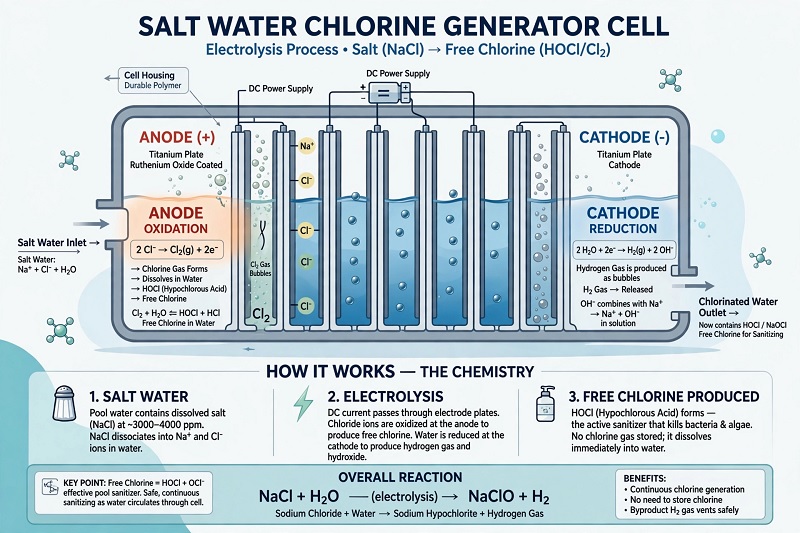
A close-up diagram illustrating the electrolytic process inside a salt water chlorine generator cell, showing salt being converted to free chlorine.
Evaluating Options: Finding the Best Pool Shock for Salt Water Pools
When you walk into a pool supply store or browse online, you are confronted with a dizzying array of shock treatments. However, they are not created equal, and using the wrong type of shock in a salt water pool can cause irreversible chemical imbalances. Let's break down the three primary categories of chlorine shock and determine the true winner.
1. Dichlor and Trichlor (Stabilized Chlorine):
These granular and tablet shocks are extremely popular for traditional chlorine pools, but they are a terrible choice for salt water systems. Dichlor and Trichlor contain Cyanuric Acid (CYA), also known as chlorine stabilizer. While a small amount of CYA (around 30-50 ppm) is necessary to protect your chlorine from being destroyed by the sun's UV rays, adding stabilized shock constantly introduces more CYA into the water. CYA does not evaporate; it builds up indefinitely. If your CYA levels climb too high, it leads to "chlorine lock," where the chlorine is so over-stabilized that it cannot sanitize the water. To fix this, you would have to drain a significant portion of your expensive, perfectly balanced salt water.
2. Sodium Hypochlorite (Liquid Chlorine / Bleach):
Liquid chlorine is unstabilized, meaning it does not add CYA to your pool. It is a highly effective oxidizer. However, it comes with logistical nightmares. Liquid chlorine is heavy, degrades rapidly in storage (losing up to half its potency in a few months if stored in a hot garage), and has a very high pH (around 13). Because salt chlorine generators naturally cause the pH of the pool water to rise during operation, adding high-pH liquid chlorine further exacerbates this issue, requiring you to constantly dump muriatic acid into the pool to bring the pH back down.
3. Calcium Hypochlorite (Cal-Hypo): The Ultimate Solution
This brings us to Calcium Hypochlorite, universally recognized by aquatic professionals as the best pool shock for salt water pools. Cal-Hypo is an unstabilized, highly concentrated granular powder. It typically boasts an active chlorine strength of 65% to 70%, delivering a massive, instantaneous punch of oxidation to obliterate chloramines and algae without adding a single drop of unwanted cyanuric acid to your water. Furthermore, it has a more neutral pH impact compared to liquid chlorine. While it does add a small amount of calcium to the water, this is generally beneficial or easily manageable in most salt water environments.
Scaling Up: Vi chlorine 25kg for Medium to Large Residential Pools
Once you have identified Cal-Hypo as the superior chemical agent, the next step is ensuring you have a reliable, high-purity supply. Purchasing small, 1-pound bags of diluted shock from big-box retailers is often wildly inefficient and expensive, especially if you manage a large residential pool or live in a climate with year-round swimming seasons.
For consistent maintenance and emergency water clarification, upgrading your chemical logistics is a smart move. Utilizing the Vi chlorine 25kg packaging provides an exceptional balance of heavy-duty sanitizing volume and ease of handling. This professional-grade format ensures that when a severe thunderstorm hits, turning your pristine salt pool into a cloudy, debris-filled mess, you have an ample supply of 70% active calcium hypochlorite on hand to immediately shock the system and restore crystal-clear water overnight.
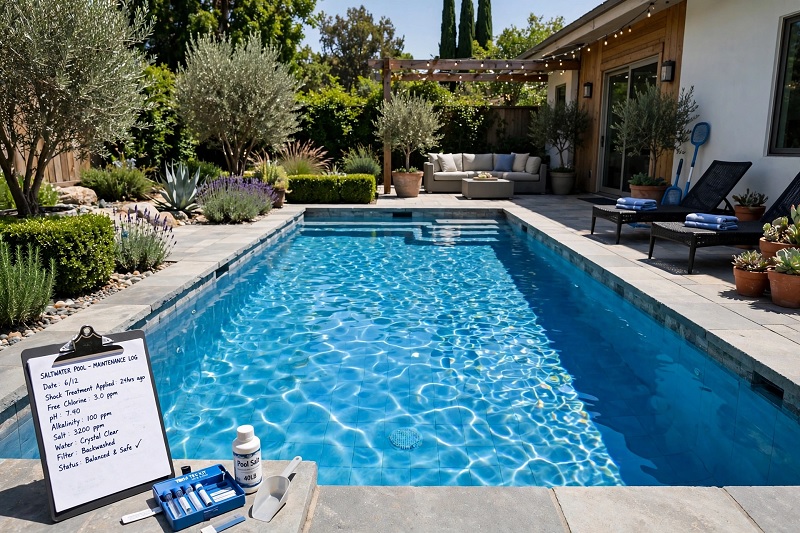
A pristine, sparkling blue backyard salt water pool surrounded by landscaping, demonstrating the results of proper chemical maintenance and shock treatments.
Industrial Power: The Role of vi chlorine 45kg in Commercial Applications
The principles of water oxidation do not stop at the edge of the backyard swimming pool. In commercial settings—such as large community aquatic centers, resort pools, and massive industrial water storage facilities—the volume of water and the sheer amount of organic contamination demand a much more robust approach.
For these massive operations, facility managers turn to bulk, high-purity solutions. The heavy-duty vi chlorine 45kg drum is engineered specifically for these environments. It provides an uninterrupted, cost-effective supply of aggressive sanitizing power. Whether used for automated continuous dosing systems or massive overnight shock protocols to eradicate resistant black algae strains, having access to un-stabilized, high-concentration Cal-Hypo guarantees that commercial operators can meet strict health department regulations and maintain impeccable water clarity under the heaviest bather loads.
From Backyard Pools to Global Biosecurity: The Aquaculture Connection
It is fascinating to realize that the exact same chemical principles that keep your salt water pool safe and clear are currently driving multi-billion-dollar global agricultural industries. In the commercial aquaculture sector, particularly in intensive shrimp farming, managing water quality is a matter of life and death for the crop. Shrimp are incredibly sensitive to bacterial pathogens, such as Vibrio, which can decimate an entire harvest in days.
Just as a pool owner uses Cal-Hypo to shock their pool, aquaculture farmers use massive doses of high-purity calcium hypochlorite to sterilize their grow-out ponds during the preparation phase. This rigorous biosecurity protocol ensures that the water column is completely free of disease-carrying organisms before the delicate shrimp post-larvae are introduced.
The massive scale and economic impact of these practices are extensively documented. For an in-depth look at how water treatment is shaping the future of global seafood production, consider the insights provided in the Global Shrimp Market Outlook 2025: A Golden Opportunity for Asia. This analysis highlights how adherence to strict water purification standards is the key differentiator for profitable exporters.
Furthermore, the integration of advanced chemical solutions into agricultural best practices is frequently showcased at major industry expos. Breakout methodologies and success strategies were recently highlighted in the comprehensive report: AQUADELTA - Dr.Tom Accompanies Vietshrimp 2025: Vi-CHLORiNE Solution Enhancing Biosecurity in Aquaculture, demonstrating the critical reliance on premium chlorine formulations.
Theoretical science is backed up by boots-on-the-ground reality. The transformative power of reliable water treatment is best expressed by the producers themselves. Discover firsthand accounts of operational improvements and stabilized water quality in the article What Do Local Farmers Say About Vi-CHLORiNE, where regional farmers share their success stories of improved survival rates utilizing professional-grade calcium hypochlorite.
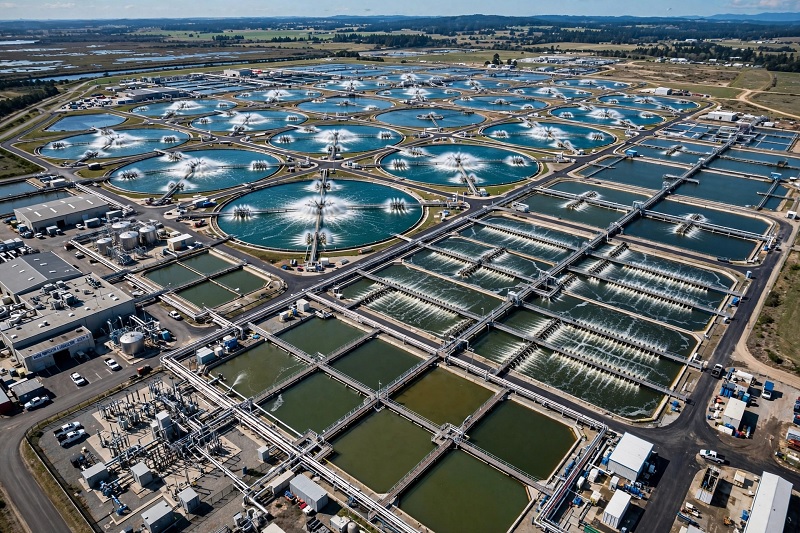
A sprawling commercial aquaculture facility featuring massive water treatment and aeration ponds, illustrating the industrial scale of water purification.
Step-by-Step: How to Apply the Best Pool Shock for Salt Water Pools
Knowing what product to use is only half the battle; applying it correctly ensures maximum efficacy and protects your pool surfaces. Here is the professional method for shocking your salt water pool using Calcium Hypochlorite:
- Step 1: Test Your Water. Before doing anything, use a reliable drop test kit to measure your Free Chlorine, Combined Chlorine, pH, and Cyanuric Acid levels. Ensure your pH is balanced between 7.2 and 7.6, as chlorine is far more effective in this slightly acidic to neutral range.
- Step 2: Wait for the Sun to Go Down. Never shock your pool in the middle of a sunny day. Ultraviolet rays destroy unstabilized chlorine extremely quickly. Shocking at dusk or night gives the chemical a full 8 to 12 hours to oxidize contaminants without interference from the sun.
- Step 3: Pre-Dissolve the Granules. Fill a clean 5-gallon bucket with pool water. Slowly pour the required amount of Cal-Hypo granules into the bucket (never add water to the chemical, always chemical to water). Stir gently with a wooden or plastic stick until dissolved. This prevents undissolved granules from sitting on the bottom of the pool and bleaching your plaster or vinyl liner.
- Step 4: Distribute and Circulate. Turn on your pool pump to its highest setting. Slowly pour the dissolved shock solution around the perimeter of the deep end. Leave the pump running for at least 12 to 24 hours to ensure the highly chlorinated water circulates through the filter, the salt cell housing, and all plumbing lines.
- Step 5: Retest Before Swimming. Wait until the free chlorine levels drop back down to a safe swimming range (typically 1.0 to 3.0 ppm) before allowing anyone to re-enter the pool.
Frequently Asked Questions (FAQ) About the Best Pool Shock for Salt Water Pools
Q1: How often should I use the best pool shock for salt water pools?
A: Even with a perfectly functioning salt cell, you should proactively shock your pool every two to four weeks depending on usage. You should also shock immediately after heavy rainstorms, large pool parties, or if the water begins to look cloudy or smell like chemicals.
Q2: Will Calcium Hypochlorite scale up my salt cell?
A: If your pool's overall calcium hardness is already extremely high (above 400 ppm), Cal-Hypo can contribute to scale over a long period. However, for most pools, routine use combined with regular salt cell cleaning (using a mild muriatic acid wash every few months) prevents any scaling issues.
Q3: Can I just use the "Super Chlorinate" button on my salt generator instead of buying shock?
A: While the Super Chlorinate feature increases chlorine output to 100% for a set period (usually 24 hours), it produces chlorine gradually. If you have an active algae bloom or high chloramines, this gradual increase is not fast enough to reach breakpoint chlorination. Furthermore, overusing this feature significantly wears out the expensive titanium plates in your salt cell.
Q4: Why shouldn't I use Dichlor shock in my salt pool?
A: Dichlor contains cyanuric acid (CYA). Salt pools generally only need about 30-50 ppm of CYA. Because CYA never evaporates, constantly using Dichlor shock will cause CYA levels to skyrocket, leading to chlorine lock where your free chlorine is rendered completely ineffective.
Q5: Is it safe to swim immediately after shocking the pool?
A: No. Shocking elevates the free chlorine levels to 10 ppm or much higher, which can cause severe skin irritation, bleach swimsuits, and burn your eyes. Always wait until the chlorine levels drop back below 5.0 ppm (ideally 1.0 - 3.0 ppm) before swimming, which usually takes 12 to 24 hours.
Upgrade Your Pool Maintenance Arsenal Today
Stop fighting cloudy water and chloramine buildup with inferior chemicals. Switch to professional-grade, high-purity calcium hypochlorite to keep your salt water pool sparkling, safe, and algae-free all season long.
Contact Our Water Experts Now